Chasing The Bean · The Journal · November 27, 2026
Arabica: how a coffee from Ethiopia became the world’s favourite
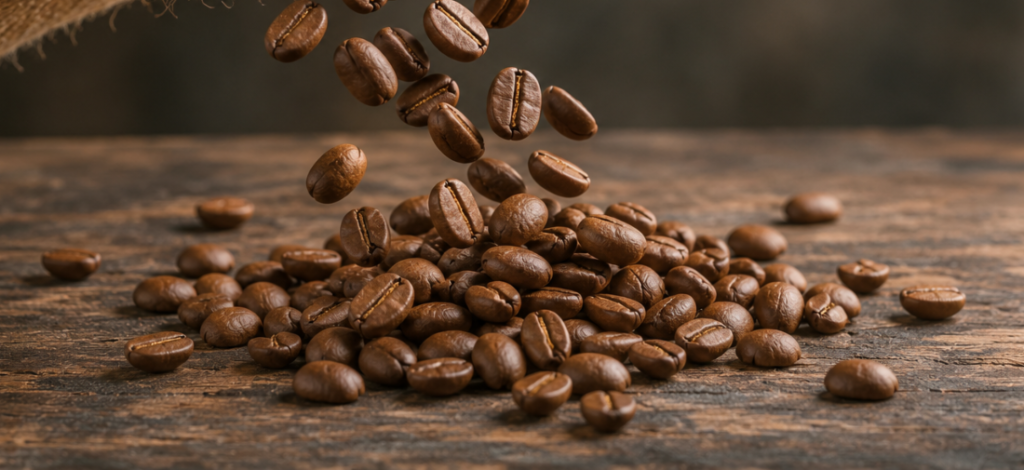
The world’s most widely grown coffee is Arabica. It accounts for about 56% of global coffee production, according to the US Department of Agriculture’s forecast for 2026/27. Strictly speaking, Arabica is a species, Coffea arabica. It includes varieties such as Typica, Bourbon and Geisha, the coffee behind the record-breaking Panamanian lot we covered in Total Coffee. How did a plant from the forests of Ethiopia end up in more cups than any other coffee?
A coffee plant born in the wild
Arabica’s story began long before anyone roasted a bean. Genetic research shows that the plant arose when ancestors of two coffee species crossed naturally in Africa. One was Coffea canephora, the species we know as Robusta. The other was Coffea eugenioides. Arabica evolved in the forests of what is now Ethiopia, where wild populations still hold genetic diversity that many cultivated plants have lost. So the two names you see most often on coffee bags, Arabica and Robusta, have a family connection that predates coffee drinking itself.
Yemen turned coffee into a trade
By the 15th century, coffee drinking was documented in Yemen. Sufi communities used it to stay alert during nighttime devotions, and Yemeni growers cultivated Arabica as a crop. The port of Mocha, also called Mokha, became a major centre of the coffee trade. From Yemen, the drink spread to cities including Mecca, Cairo and Istanbul, and eventually reached Europe. Long before mocha meant coffee with chocolate, the name belonged to a port that helped introduce coffee to the world.
A few plants changed what the world grows
Seeds from Yemen reached India, and the Dutch took coffee from India to Java in the late 1600s. In 1706, a plant from Java reached Amsterdam’s botanical garden. Coffee from this lineage later made its way to the Caribbean and spread through the Americas. That branch became known as Typica. The French took a separate route, bringing Yemeni coffee to the Indian Ocean island then called Bourbon, now Réunion. The plants that survived there gave rise to the Bourbonlineage. Between them, these two branches underpin much of the Arabica grown around the world today.
That journey also left Arabica with a weakness. So much cultivated coffee descends from so few plants that it has a narrow genetic base, leaving many varieties vulnerable to diseases such as coffee leaf rust. The wild coffee populations of Ethiopia therefore matter to the future of the crop as much as to its past. The next time you see 100% Arabica on a bag, look for the variety name alongside it. That’s where you start to see which branch of the story you’re drinking.